

Keywords
obesity
metabolic syndrome
weight loss
How to Cite
Abstract
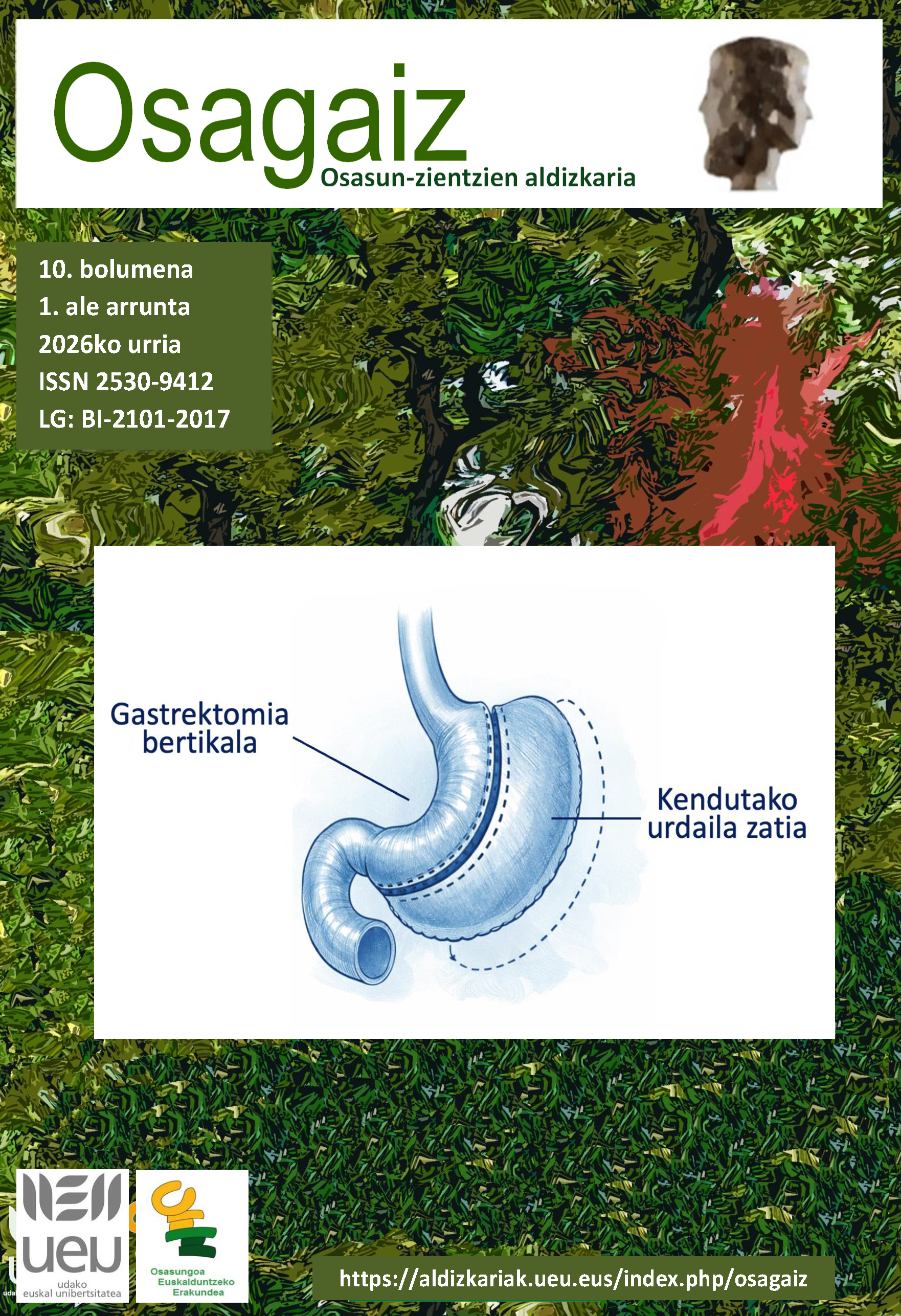
Introduction: Vertical sleeve gastrectomy (VSG) is currently the most widely performed bariatric surgery worldwide. However, long-term outcome evidence remains limited. The aim of this study was to evaluate weight and metabolic outcomes at five years of follow-up, comparing them with findings reported in the literature.
Materials and Methods: This is a retrospective study based on a prospective, single-center series of 321 patients who underwent VSG at the University Hospital of Cruces between 2011 and 2020. Outcome variables (BMI, %EWL, T2DM, HTA, DLP, MS, OSA) were analyzed according to sex, age, and baseline BMI. Data were collected through a systematic review of medical records, with a structured five-year follow-up.
Results: Follow-up rates were 99%, 89.5%, and 80% at years 1, 3, and 5, respectively. %EWL was 74.2%, 70.3%, and 62.4%, respectively. Younger age (<55 years) and baseline BMI <45 kg/m² were associated with better outcomes. Comorbidity remission rates were: T2DM (71,3%), HTA (60,9%), DLP (19,5%), OSA (90,5%), and MS (75%).
Conclusions: Vertical sleeve gastrectomy is a safe and effective bariatric technique at five years, offering sustained weight loss and significant improvement in major metabolic associated health conditions.

This work is licensed under a Creative Commons Attribution-NonCommercial 4.0 International License.
Copyright (c) 2026 Ibabe Villalabeitia Ateca, Aingeru Sarriugarte Lasarte, Gaizka Errazti Olartekoetxea